
About
What is Satyananda Yoga?
Sri Swami Satyananda Saraswati (1923–2009) developed this form of yoga meditation, incorporating ancient and traditional practices as well as information gleaned from modern medical-physiotherapy.
The tradition we follow
A yoga for the whole person
A guru and yoga master in both India and the West, Sri Swami Satyananda Saraswati's teachings are propagated inside India as the Bihar School of Yoga and outside India as the Satyananda Yoga tradition.
Satyananda Yoga looks on the myriad traditional Indian yogic practices with equal vision, and acknowledges the validity of all of their methods for spiritual development. More gentle than some popular forms of yoga in the West, the Satyananda system incorporates the whole person, not just the body.
There is an emphasis on awareness, and practitioners are encouraged to learn about all aspects of their personality through yoga. Change is a process that takes place naturally as a consequence of regular practice with full awareness, rather than by forcing the mind and body beyond its limit.
The practice includes
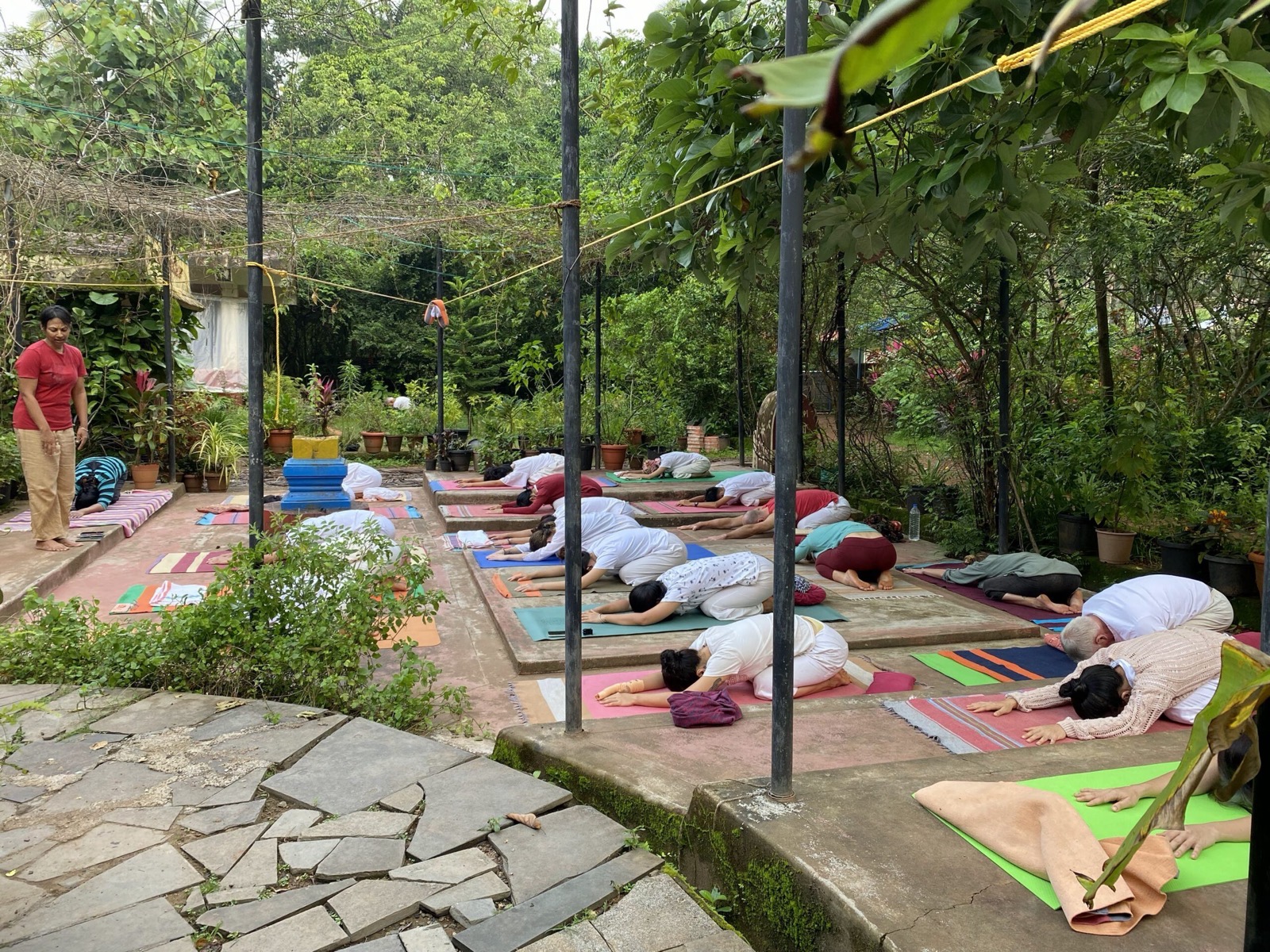
Satyananda Yoga involves the practice of
- Asanas (postures)
- Pranayama (breathing techniques)
- Shatkarmas (six action / purification methods)
- Yoga Nidra (psychic sleep meditation)
- Kriya Yoga, Kundalini Yoga, Mudras (gestures), Bandhas
- Dhyan (meditation from the Tantras), e.g. Ajapa Japa (meditation breath with mantra), chakra shuddhi (chakra purification), Yoga Nidra (psychic sleep meditation), Tratak (candlelight and gazing meditation), and Naada Yoga (the yoga of sound, including singing, chanting and Om chanting)
- Mantra Yoga (the repetition of sacred sounds)
- Karma Yoga
- Jnana Yoga
- Seva Yoga
The lineage
From Sivananda to today
Asanas (postures) balance the body and mind through the physical body, pranayama (breathing practices) works on the energy body, and meditation calms and focuses the mind. The tradition also encourages a yogic lifestyle, for renunciates and householders alike.
Inspired by his guru, Swami Sivananda Saraswati (1887–1963), Swami Satyananda authored over 80 books, including Asana Pranayama Mudra Bandha (1969), reprinted many times and used as a standard manual. He founded the International Yoga Fellowship (1956), Bihar School of Yoga (1963), Yoga Research Society (1988) and Sivananda Math (1984).
The work of the Bihar School of Yoga is continued by Swami Satyananda's appointed successors, Swami Niranjanananda (b. 1960) and Swami Satyasangananda (b. 1953). Trained sannyasins (renunciates) carry these teachings to groups, seminars, conventions and lecture tours around the world.
Where spiritual life meets social needs
Sivananda Math
Serve, love, give, purify, be good, do good, meditate, realize.
Seva, or service to humanity, is the basis of spiritual life. These were Swami Sivananda's fundamental teachings. He taught that spiritual life started with seva and culminated in meditation, his message was that serving others is serving God, and meditation was at the end of his list.
The first precondition of sadhana (spiritual practice) is to recognize the misery, suffering, and needs of others. Whatever one's assets may be, they are not meant for benefiting oneself alone. One whose heart is open, who is selfless, and considers that all he has belongs to God, will realize the truth.
To this end, Swami Satyananda founded Sivananda Math at Munger in 1984, in memory of his guru Swami Sivananda. Now there are branches all over the world following these principles.
Shankar Prasad Organic Farm and Ashram · Behind Anand Ashram High School, Bankikodla Village, Hannehalli, Taluka Kumta, Karnataka, 581319, India · Tel: (+91) 8095329129 · E-mail: swamiyogaratna@gmail.com · Facebook: facebook.com/shankarprasadyogaandmeditation